
The UN Millennium Goals were designed as a global commitment to reduce poverty, protect the environment, improve health, and ensure sustainable development for future generations. While these goals are often discussed in policy rooms and international forums, their success depends largely on how they are implemented at the ground level. One of the most critical yet overlooked pillars in achieving the UN Millennium Goals is waste management.
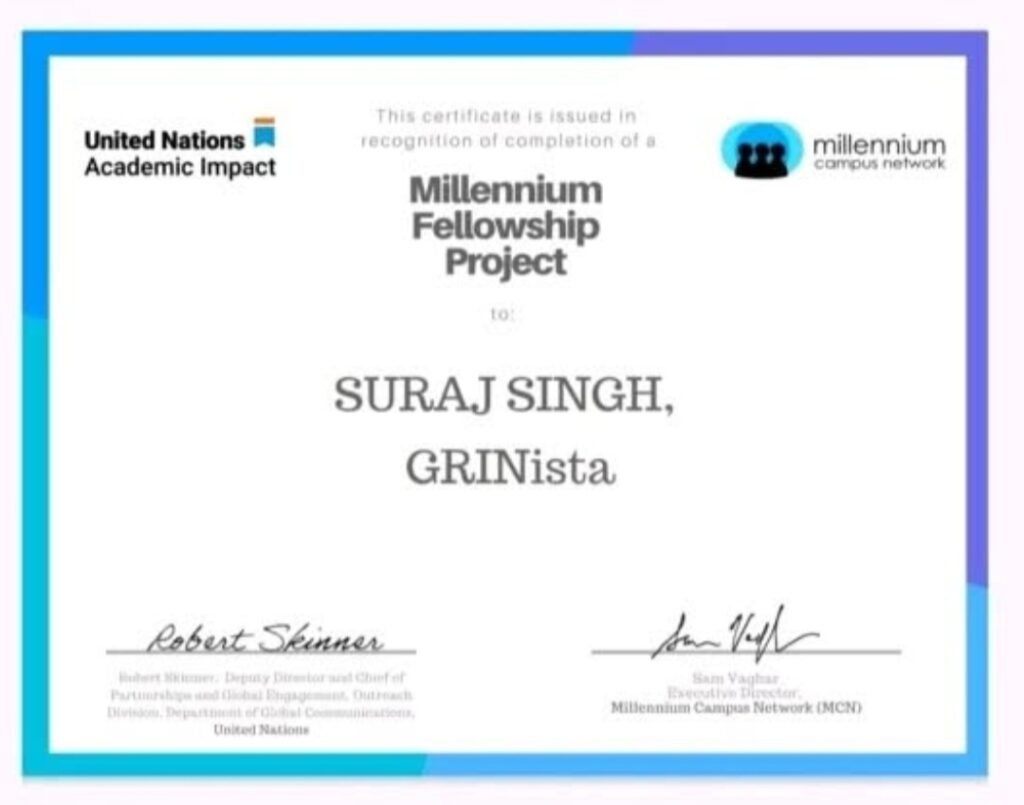
In countries like India, waste is not just an environmental concern. It affects public health, urban infrastructure, climate resilience, water resources, and social equality. This is where GRINista, a UN Millennium Recognised organisation, plays a vital role by converting sustainability from theory into daily action.
The Connection Between the UN Millennium Goals and Waste Management
The UN Millennium Goals focus on balanced development, where economic growth does not come at the cost of environmental destruction. Waste management directly supports several of these goals by reducing pollution, improving sanitation, creating employment, encouraging responsible consumption, and ensuring long-term sustainability. When waste is unmanaged, it contaminates water, pollutes air, spreads disease, and wastes valuable resources. Such outcomes directly oppose the vision of the UN Millennium Goals.
India’s Waste Challenge
India generates millions of tonnes of waste every year, yet a significant portion is dumped in landfills or open areas without proper treatment. Plastic waste enters rivers and oceans, organic waste releases harmful gases, and recyclable materials are lost forever. This waste crisis makes achieving the UN Millennium Goals extremely difficult unless strong, structured, and community-based waste systems are implemented.
GRINista: A UN Millennium Recognised Organisation for Sustainability
GRINista is a UN Millennium Recognised organisation working actively towards sustainability through waste management solutions. Its operational model is currently built around 80 per cent waste collection and segregation, and 20 per cent planned recycling integration. This balanced approach ensures that waste is not only removed from the environment but also prepared for reuse and recycling. GRINista does not treat waste as a burden, but as a resource waiting to be managed responsibly.
Environmental Protection Through Practical Action
Environmental sustainability is at the heart of the UN Millennium Goals. GRINista supports this by ensuring that waste is segregated at source, which prevents recyclable materials from being contaminated and lost. Through its operations, GRINista helps reduce landfill pressure, prevent plastic leakage into ecosystems, lower greenhouse gas emissions, protect soil and groundwater, and encourage composting of organic waste. Each correctly segregated bag of waste contributes directly to environmental protection under the UN Millennium Goals.
Public Health Improvement
Poor waste management is one of the hidden causes of many health problems. Open dumping leads to mosquito breeding, contaminated water, respiratory illness from burning waste, and unsafe living conditions. GRINista’s structured waste collection and segregation system significantly reduces these risks. Clean surroundings mean healthier communities, which supportthe UN Millennium Goals related to health, sanitation, and quality of life.
Economic Sustainability and Livelihood Creation
The UN Millennium Goals emphasise inclusive economic growth. Waste management creates sustainable livelihoods across multiple levels, such as collection, segregation, recycling, composting, logistics, and education. GRINista enables dignified employment while ensuring worker safety, training, and respect. When waste becomes a source of income, sustainability becomes economically practical rather than idealistic.
Community Awareness and Behavioural Change
One of the strongest contributions of GRINista to the UN Millennium Goals is its focus on people. Infrastructure alone cannot solve the waste crisis. Behaviour must change. GRINista actively promotes household waste segregation, plastic reduction habits, recycling awareness, responsible consumption, and community participation. By educating citizens, GRINista ensures that sustainability becomes a lifestyle, not just a service.
Supporting the Circular Economy Vision
The UNMillenniumm Goals encourage responsible production and consumption. GRINista supports this vision through a circular economy approach, where waste is transformed into raw material for new products. Instead of a linear system of use and throw, GRINista promotes use, recovery, and reuse. This reduces pressure on natural resources and creates long-term economic value.
GRINista’s Structured Sustainability Model
GRINista follows a clear, scalable sustainability framework that includes source-level waste collection, scientific segregation methods, material recovery planning, recycling partnerships, community education programs, and data-driven waste tracking. This model ensures that sustainability is measurable, transparent, and replicable across cities and communities, which is essential for achieving the UN Millennium Goals.
GRINista & the UN SDGs
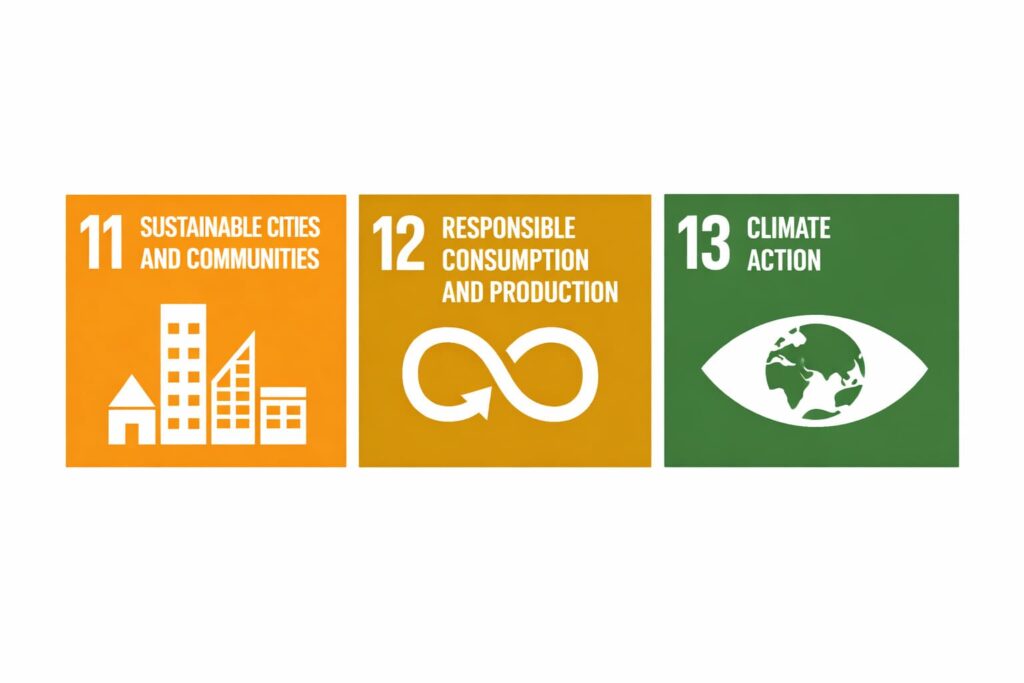
GRINista is committed to building cleaner, greener, and climate-resilient communities by aligning its work with SDG 11 (Sustainable Cities and Communities), SDG 12 (Responsible Consumption and Production), and SDG 13 (Climate Action).
Through innovative waste management solutions, community awareness, recycling initiatives, and responsible lifestyle promotion, GRINista transforms waste into opportunity — creating sustainable cities, reducing environmental impact, and contributing to a healthier planet.
Measuring Impact for the UNMillenniummm Goals
GRINista tracks its impact using indicators such as waste diverted from landfills, segregation accuracy rates, recycling potential recovery, community participation levels, and environmental savings. These metrics ensure accountability and continuous improvement, strengthening GRINista’s contribution to the Millennium Goals.
Challenges and Future Direction
Waste management still faces many challenges in India, includinga ack of awareness, infrastructure gaps, weak policy enforcement, and resistance to behavioural change. GRINista addresses these through innovation, partnerships, education, and community engagement. The future focus of GRINista is to expand recycling integration, strengthen data systems, and deepen community involvement so that sustainability becomes self-sustaining.
Why GRINista Matters in the UN Millennium Goals Journey
The Millennium Goals can only succeed when local organisations convert global vision into ground reality. GRINista, as a UN Millennium Recognised organisation, represents this bridge between policy and practice. Its work proves that sustainability is not achieved through speeches, but through consistent daily action.
Conclusion
The UN Millennium Goals remind the world that development without environmental responsibility is meaningless. Waste management stands at the centre of this responsibility. GRINista’s contribution shows that waste can protect ecosystems, improve public health, create livelihoods, and build sustainable communities. Through its structured collection, segregation, and recycling roadmap, GRINista is transforming waste into opportunity. As a UN Millennium Recognised organisation, GRINista continues to prove that sustainability is not a future dream but a present responsibility. By supporting GRINista’s mission, we move one step closer to fulfilling the promise of the UN Millennium Goals and creating a cleaner, healthier, and more sustainable world for generations to come.


